
The SWOT evaluation is a time-tested method used when making a decision or a plan of action. For example, you might find it helpful when starting a new, or evaluating a current ministry, program or project.
The four aspects of the evaluation include:
- Internal Strengths you have that are pleasing to Jesus, are characteristic of a spiritually healthy believer or that enable you to accomplish the goal of your plan.
- Internal Weaknesses you have that need to be corrected because they are displeasing to Jesus, are characteristic of a spiritually unhealthy believer or hinder your ability to accomplish the goal of your plan.
- External Opportunities (and resources) that can help you accomplish the goal of your plan.
- External Threats (and obstacles) that can hinder you from accomplishing the goal of your plan.
Prayerfully work through the process outlined below and use this information to adjust your goals/plan so you can maximize your strengths and opportunities, minimize your weaknesses, and mitigate any threats.
Diagram showing the relationships between the four SWOT considerations.
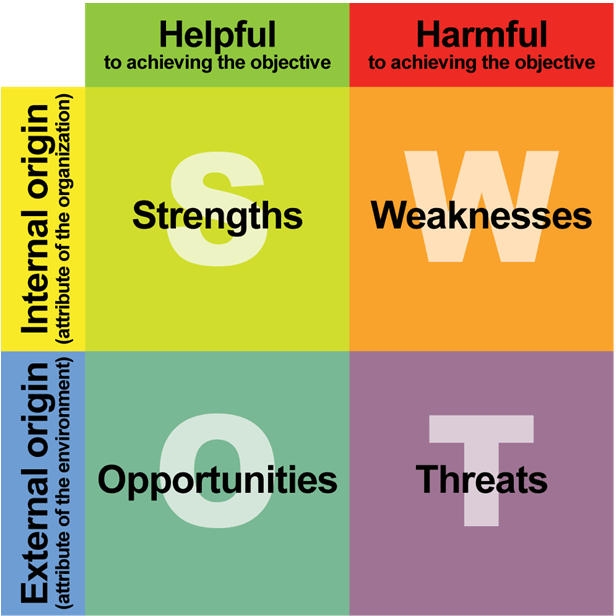
You can easily make a worksheet like this:
- Fold a piece of paper in half vertically and then horizontally, which then gives you the four quadrants like this diagram.
- At the top of your worksheet, write the purpose of this SWOT analysis.
- Write the titles (Strengths, Weaknesses, Opportunities, Threats) at the top of each quadrant.
- Fill in the quadrants of the worksheet, listing the top 3-5 circumstances in each quadrant.
- Add any Bible references that are helpful to your analysis.
- Review your worksheet with a trusted friend or advisor to check the accuracy and reliability of your analysis.
- Prayerfully consider this information to help you make your decision and/or plan.
- On the back of the worksheet, make a list of the next steps you need to take to move forward with this idea (such as work on your weaknesses, explore the opportunities, or mitigate the threats) or explain why this is not a good idea.
 Thessalonian Faith