
(43-09b)
… everyone who believes in Him shall not perish but have eternal life.
(John 3:16)
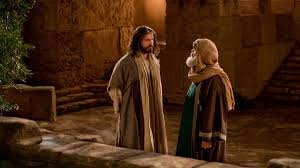
If you want to know what the Gospel is, this is it. John 3:16-21 is the heart of the Gospel message; the pinnacle truth of the Bible. The passage presents us with:
- The Reality of Salvation (John 3:16-17)
- Our Response to Salvation (John 3:18)
- The Reason for Salvation (John 3:19-21)
For this week’s study:
- Any time you read or study the Bible, always start with prayer, asking God to guide you, so you understand God’s message and learn His methods for living.
- Read John 3:16-21 several times using your Bible and the two translations provided below to understand the boundaries, content and flow of the passage.
- Read and respond to the “Study Guide” and use the “Study Resources” provided below to learn more from this study passage.
Read the Passage
Berean Standard Bible
(BSB)
<16>For God so loved the world that He gave His one and only1 Son, that everyone who believes in Him shall not perish but have eternal life. <17>For God did not send His Son into the world to condemn the world, but to save the world through Him. <18>Whoever believes in Him is not condemned, but whoever does not believe has already been condemned, because he has not believed in the name of God’s one and only Son.
<19>And this is the verdict: The Light has come into the world, but men loved the darkness rather than the Light because their deeds were evil. <20>Everyone who does evil hates the Light, and does not come into the Light for fear that his deeds will be exposed. <21>But whoever practices the truth comes into the Light, so that it may be seen clearly that what he has done has been accomplished in God.”2
Word Come Alive
(WCA)
(An extended translation)*
God gave his unique Son Jesus Christ
<16>God showed his overflowing love for humanity by giving up his most precious gift of all: his unique Son. God sent his Son into the world so that everyone—whoever they are—who trusts in Jesus will not perish. They will not be condemned to death but will have eternal life. This life is a full, supernatural life, knowing God and enjoying his love, peace and joy for ever.
<17>The whole purpose of God sending his Son into the world wasn’t to condemn the world to punishment, but that men and women would be rescued through him. <18>The person who trusts in Jesus is not condemned: they’ve already been declared ‘not guilty’. But the person who rejects Jesus by not trusting in him has already been condemned. This is because they’ve not trusted in God’s unique Son, in all that he is and all that he has done.
<19>You would think that everyone would welcome the rescue that Jesus offers, but no. This is God’s decisive statement: the light of the world has come in Jesus, but tragically many people want to have nothing to do with that light. In fact, they love the ways of darkness because deep down their hearts and actions are evil.
<20>Everyone whose ways are evil hates the light. They don’t come to the light; they actually avoid it. They dread the prospect of coming to the light, because they realise that their works would be shown up for what they really are.
<21>But it’s very different for those whose lives are directed by the truth. They’re not afraid to lead lives that come under God’s spotlight. It can then be clearly seen that the way they live is true to God’s ways.
* Words in italics are not translated from the original Greek text. They have been added to explain and at times apply the text, much as a preacher does on a Sunday or notes do at the foot of the page in a study Bible. These additions are integrated with the text itself, and are in italics, so readers can see what has been explained, changed or added.
Study the Passage
Study Guide
► What do verses 16 and 17 tell you about God the Father? About Jesus the Son?
► Does verse 18 support the concept of “innocent until proven guilty” or “guilty until made innocent”? How does someone become innocent in the eyes of God?
► Verses 19–21 describe two groups of people. What causes the difference between the people of these two groups?
► What does or doesn’t God want people to know, feel, think, say or do?
Study Resources
To learn more about this study passage, go to
https://www.bibleref.com/John/3/John-3-16.html. Read the commentary of each verse in the study passage. (Also read the Context Summary and the Chapter Summary.)
If you have any questions about this passage, type the verse reference or your question in the search box at the top of
https://www.gotquestions.org/ and explore the results.
If you have a study Bible, read the footnotes and study notes and see how they help you understand this passage.
 Thessalonian Faith